
Cover it up: electroplating
19/10/2010 | WAYFARER | NS
Materials corrode. Iron, despite being a comparatively cheap metal, rusts very easily. How can we protect objects made from iron? Answer: electroplating!
This amazing process can be applied to many other metals too. Basically, electroplating makes use of a process called electrolysis. During electrolysis, metal cations floating around in a liquid solution take on electrons to become neutral. (By the way, adding electrons is also called reduction or reducing, because electrons are negative and decrease/reduce the charge.) They then became the actual solid metal, and form a layer over the metal that we want it to cover.
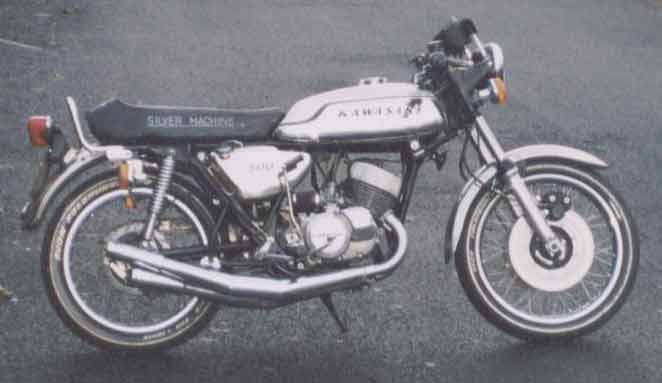
Often shiny chrome objects are only covered with a thin layer of chrome, with iron beneath it. Many gold objects, such as jewellery, are also made of cheaper metals but are then coated (or plated) with a layer of gold.
Electroplating serves various functions, such as to bestow:
abrasion and wear resistance,
corrosion protection,
aesthetic qualities, etc.
Many businesses makes lots of money by offering an electroplating service to manufacturing companies. An example is Electroplating South Africa.
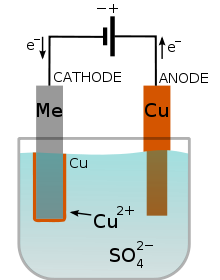
The diagram below shows how the copper anode is gradually dissolving away in the solution, and then forming a layer (deposits) on the metal cathode. Note that "Me" is not a symbol of any element, but merely represents one of many metal substances. The picture is from wikipedia.
View electroplating in action (only view this if you are using a computer, and NOT a cellphone):
Short "plating" clip:
"Plating" a coin: